
If you have ever wandered past a summer barbecue, a tailgate party, or a local fairground in the United States, there is a good chance you have seen people tossing small bags towards a slanted wooden board with a hole in it.
This game is known as cornhole, and it has grown from a casual pastime into a widely recognised competitive sport with official leagues, televised tournaments, and a dedicated following.
For newcomers, it may look simple – throw the bag and hope it goes in – but there is more to the game than first meets the eye.
This guide will walk you through the origins of cornhole, the equipment needed, the rules, and a few tips for getting started.
The Origins of Cornhole
Cornhole is believed to have originated in the Midwest of the United States, particularly in the state of Ohio, where it became a popular backyard and tailgate game.
The exact history is debated, but the most widely accepted story is that the game was inspired by older European tossing games and adapted into its modern form in Cincinnati.
Originally, the bags were filled with dried corn kernels – hence the name cornhole – and the boards were made of simple planks of wood. Over time, the game spread across the country and became a mainstay at outdoor gatherings, especially in the summer months.
Today, there are professional organisations, such as the American Cornhole League (ACL), that govern rules and organise tournaments, helping to elevate the game from a casual pastime to a serious sport.
The Basic Equipment
To play cornhole, you only need two main pieces of equipment: the boards and the bags.
A standard cornhole set includes two boards made of smooth plywood, each measuring 4 feet long and 2 feet wide.
The boards are placed at an angle with the top raised on legs so that the surface slopes downwards. Near the top of each board is a circular hole, 6 inches in diameter, positioned 9 inches from the top edge.
Regulation play requires that the boards be placed 27 feet apart, measured from the front edge of one board to the front edge of the other.
The bags are square, typically 6 inches by 6 inches, and each weighs about 1 pound.
Traditionally, they were filled with dried corn, but most modern sets use synthetic pellets, which are more durable and resistant to weather.
The bags are usually made from sturdy fabric such as duck cloth, ensuring they slide across the board but also grip slightly when landing.
Setting Up the Game
Setting up a game of cornhole is quick and simple. Place the two boards facing each other on a flat surface, such as grass, pavement, or a gym floor.
Ensure they are 27 feet apart if you are playing regulation, though beginners and children often move the boards closer together for easier play.
Players divide into two teams, with one or two players per team. Each team uses a set of four bags in a single colour to distinguish them from their opponents’ bags.
The Rules of Play
At its core, cornhole is a game of accuracy and consistency. The aim is to score points by landing bags on the board or, better still, through the hole. Here are the key rules:
Throwing: Players take turns throwing their bags, one at a time, from behind the front edge of their board. This line is known as the “foul line.”
A player may throw from either the left or right side of the board, as long as they remain behind the line. Each player throws four bags per round, alternating with their opponent.
Scoring: Cornhole uses a cancellation scoring system. A bag that goes through the hole scores 3 points. A bag that lands and stays on the board scores 1 point.
Bags that hit the ground first or slide off the board score zero. After all bags are thrown, each team’s score is compared, and only the difference is added to the leading team’s total.
For example, if Team A scores 7 points and Team B scores 5 points in a round, Team A earns 2 points.
Winning: The game continues until one team reaches or exceeds 21 points. Some house rules require the winning team to reach exactly 21, while others allow going over.
In professional play, the game ends once a team reaches 21 or more at the end of a round.
Strategy and Technique
While tossing a bag may seem straightforward, cornhole quickly becomes a game of strategy once players develop consistency.
One basic tactic is aiming to land bags directly into the hole, known as “airmails.” However, consistently sinking airmails is challenging, so players often aim to land their bags on the board in front of the hole. These “blockers” make it more difficult for opponents to slide their bags in.
Another tactic is the “slider,” where the bag lands near the front of the board and slides smoothly into the hole. This requires a controlled throw with the right spin and force.
More advanced players also master the “push shot,” where a newly thrown bag knocks one of their own bags into the hole while also taking up space on the board. These strategies make cornhole much more tactical than it first appears.
Cornhole Etiquette
Because cornhole is such a social game, good etiquette is important. Players should not distract opponents while they throw, and everyone should remain behind the foul line until it is their turn.
Respecting the equipment is also encouraged – no one wants to play on damaged boards or with torn bags.
Cornhole is often played casually at parties, so keeping the atmosphere fun and friendly helps everyone enjoy the experience.
Cornhole as a Social Activity
One reason cornhole has become so popular is that it is easy to learn but difficult to master, making it enjoyable for players of all ages and skill levels.
At family gatherings, children can play with lighter bags and closer boards, while adults can enjoy competitive games at regulation distance. At sporting events, cornhole has become a staple of the tailgating tradition, with dozens of games taking place in car parks before the main event.
Even weddings and community festivals now often feature cornhole boards decorated to match the occasion.
Professional Cornhole
Although many people think of cornhole as a casual backyard game, there is now a thriving professional scene.
The American Cornhole League (ACL) and the American Cornhole Organisation (ACO) both organise regional and national tournaments.
These events attract skilled players who can consistently land bags with incredible precision. Matches are even broadcast on television, introducing new fans to the sport.
Professional boards and bags are manufactured to strict standards, and competitive players often practise for hours to refine their throwing techniques.
This professionalisation has helped cornhole gain recognition as more than just a pastime.
Getting Started with Cornhole
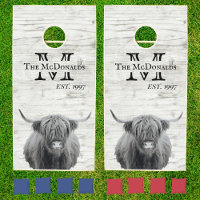
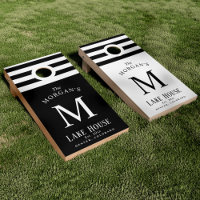
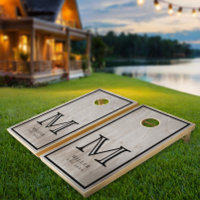
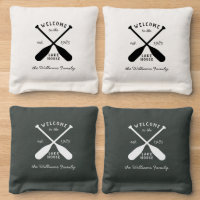
If you are interested in trying cornhole for yourself, the best way to start is by purchasing or borrowing a set. The cornhole examples shown to illustrate this article are all available from the online Zazzle platform and many can be personalised.
Many sporting goods stores and online retailers sell boards and bags in a wide variety of designs. Some are simple wooden sets, while others are decorated with team logos, custom artwork, or weather-resistant finishes.
Once you have your equipment, set up in a safe outdoor space and invite friends or family to join. Start with shorter distances to build confidence, and gradually move to regulation length as you improve.
Cornhole is easy to transport, so it is ideal for picnics, camping trips, and beach outings. With very little setup required, it offers instant fun wherever you go.
Whether you are looking for a casual activity to enjoy with loved ones or are curious about testing your skills in a competitive setting, cornhole is a game that welcomes everyone.

Final Thoughts
Cornhole is one of those rare games that is simple to learn, portable, and endlessly entertaining. From its humble beginnings with corn-filled bags on homemade boards, it has grown into a pastime loved by millions across America and beyond.
Its blend of skill, strategy, and social fun makes it perfect for gatherings large and small. Whether you play casually in the garden or follow professional tournaments on television, cornhole offers something for everyone.
So the next time you see a set of boards set up at a party or event, do not hesitate to join in – you may find yourself hooked on this friendly and surprisingly competitive game.
As someone who has been designing for Zazzle for years, I know first-hand how powerful print-on-demand can be. It removes the risk for creators, makes one-off custom products possible, and keeps the focus firmly on originality – which is why I continue to feature Zazzle throughout my posts.
Click any Social Media Icon Below, or in Your Browser, to Share. Thank You!...


No comments:
Post a Comment