
Follow this blog by clicking the button at the top of the sidebar →
(or beneath this article if you’re viewing on a mobile device).
The bed of nails has intrigued and astonished people for centuries – an object that blends science, spirituality and spectacle.
In this post we explore how a simple board of spikes became a symbol of endurance and enlightenment, from its origins in Indian yogic tradition to its reinvention in circuses, classrooms and modern wellness culture.
Long seen as both mystical and marvellous, the bed of nails tells a story that bridges faith and physics.
This article reveals how a practice once linked to meditation and asceticism evolved into a global symbol of endurance, curiosity and creativity.
The Fascinating History of the Bed of Nails
The idea of a bed bristling with sharp nails may sound like something from a medieval torture chamber, yet the "bed of nails" has long been associated with Indian mysticism, meditation and endurance.
 |
| View the Bed of Nails Cartoon Collection... |
For centuries it has captured the imagination of travellers, writers and performers, blending genuine yogic practice with theatrical showmanship.
In this article we will explore its origins, cultural meanings, historical accounts, and the way it has travelled from sacred contexts to circuses, classrooms and even modern wellness products.
Early Roots in Indian Tradition
The bed of nails is most strongly linked with Indian yogis, ascetics who sought to transcend ordinary physical limitations through meditation, austerity and discipline.
Ancient yogic texts refer to various practices of self-mortification, designed to demonstrate detachment from bodily comfort and to focus the mind on higher spiritual goals.
While the precise origins of lying on a spiked bed are hard to pinpoint, early travellers to India during the medieval period describe fakirs and sadhus reclining calmly upon such beds as a sign of spiritual power and indifference to pain.
The Science Behind the Nails
At first glance, it seems impossible that anyone could lie on a bed of sharp metal points without injury. The explanation is simple physics.
If the nails are closely spaced and evenly distributed, the body’s weight is spread across hundreds of points, reducing the pressure at each one. Instead of piercing the skin, the nails press against it.
Of course, this only works if the person lies down carefully and the nails are not too widely spaced. The demonstration, while dramatic, is less perilous than it appears, which made it an ideal spectacle for both mystics wishing to impress devotees and entertainers eager to astonish audiences.
Western Encounters and Travel Accounts
When European travellers and colonial officials visited India in the 17th, 18th and 19th centuries, they often wrote vivid accounts of fakirs lying on beds of nails.
Some described them as evidence of extraordinary spiritual powers, others dismissed them as mere tricks.
These reports helped cement the bed of nails as an exotic symbol of the East in the Western imagination. Illustrations in Victorian periodicals frequently showed ascetics reclining on spike-laden boards, reinforcing the stereotype of the mysterious and pain-defying yogi.
From Sacred Practice to Public Performance
By the late 19th and early 20th century, the bed of nails became a popular act in circuses, sideshows and vaudeville theatres.
Performers from India and beyond demonstrated their ability to lie or even have stones smashed on their chest while stretched across the nails.
These spectacles often blended genuine yogic techniques with theatrical exaggeration, sometimes adding elements of fakery to heighten the drama.
The bed of nails became a shorthand for endurance and exoticism, whether used sincerely or as a stage trick.
Educational Demonstrations
In the 20th century, the bed of nails found its way into classrooms and science demonstrations. Physics teachers around the world used it to illustrate the principle of pressure distribution.
A willing volunteer might lie on a bed of carefully spaced nails without harm, much to the amazement of their classmates.
Sometimes balloons were placed between the demonstrator and the nails, showing that they too remained unpopped thanks to the spreading of force. In this context, the bed of nails moved away from mysticism and into the realm of scientific curiosity.
Modern Wellness and Adaptations
More recently, the bed of nails has inspired modern wellness products.
Acupressure mats, covered with plastic spikes rather than metal nails, are marketed as aids for relaxation, back pain relief and improved circulation. These mats borrow the imagery of the bed of nails but adapt it for home use, presenting discomfort as a route to health benefits.
While scientific evidence for these claims is mixed, the popularity of such products shows the enduring appeal of the concept, centuries after the first yogis lay upon real iron spikes.
Symbolism and Popular Culture
The bed of nails has become a powerful metaphor in popular culture. It symbolises toughness, resilience and the ability to withstand pressure. It has appeared in films, cartoons, comic strips and literature as a shorthand for endurance or exoticism.
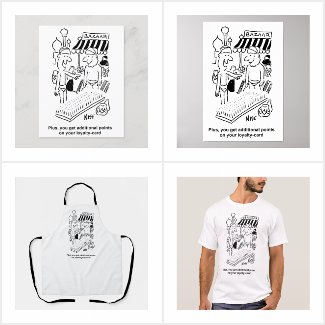
My cartoon, shown at the beginning of this article on a t-shirt, continues this playful tradition, using the bed of nails as the set-up for a witty pun about "points".
Such humour shows how deeply the image has entered our collective imagination, not just as a mystical practice but as a cultural symbol ripe for reinterpretation.
Conclusion
From its roots in Indian ascetic practices to its role in circus acts, physics lessons and modern wellness trends, the bed of nails has travelled a long and fascinating journey.
It remains one of those curious cultural phenomena that blur the line between science, spirituality and spectacle.
Whether seen as a test of faith, a scientific demonstration or the subject of a good-natured cartoon, the bed of nails continues to prick our imagination – though fortunately not our skin.
There’s always something new to explore here on the blog.
Pet lovers might enjoy reading why poodles make the perfect pet – smart, stylish and loyal, while creative types could be inspired by personalised certificates and awards you can design yourself.
Or, for a bit of nostalgia and fun, dive into Disney’s Frozen theme on Zazzle, full of charm for both children and adults.
Click any Social Media Icon Below, or in Your Browser, to Share. Thank You!...


No comments:
Post a Comment